
Citizenship by Real Estate Investment
Citizenship by real estate investment refers to citizenship programmes that include a qualifying property route as part of the legal investment framework. In practice, these routes are concentrated in the Caribbean, with Türkiye standing out as a major non-Caribbean property-led option.
This page helps you compare the main citizenship routes linked to real estate, understand how approved property models differ from standard market purchases, and identify which programmes are most relevant if you want a property-backed route rather than a pure contribution option.

Citizenship Programmes with Real Estate Investment Routes
Not every citizenship by investment programme includes real estate, and not every real estate route works in the same way. Some programmes restrict applicants to government-approved developments, while others allow a broader qualifying property purchase subject to specific legal conditions.

CARIBBEAN
Antigua and Barbuda
Antigua and Barbuda includes a recognised real estate route within its citizenship by investment framework. Applicants must invest in an approved real estate project, and the property is generally subject to a minimum holding period, making this a structured approved-project route rather than an unrestricted property purchase model.
CARIBBEAN
Dominica
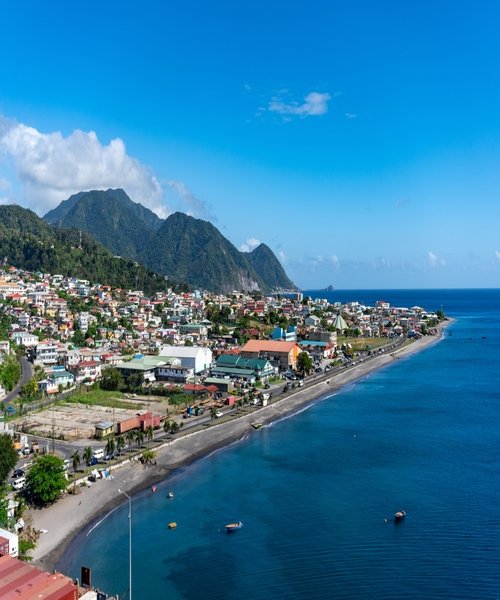
Dominica offers citizenship through investment in an Approved Project under its real estate option. The official framework also links this route to a defined holding period, which makes it a useful option for applicants comparing regulated project investment rather than open-market property acquisition.
CARIBBEAN
Grenada
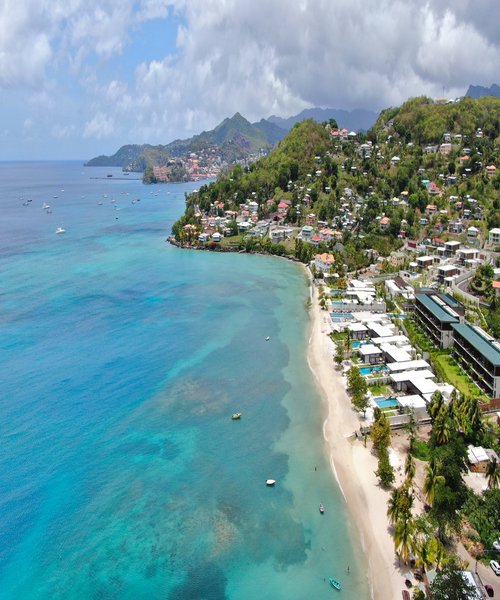
Grenada’s citizenship programme includes an approved project route, and the official programme states that the vast majority of these projects are real estate developments such as hotels, resorts, and villas. This makes Grenada one of the clearest real-estate-linked citizenship options in the Caribbean, while still keeping the route tied to approved projects and authorised local agents.

CARIBBEAN
St. Kitts and Nevis
St. Kitts and Nevis remains one of the strongest pages to feature here because the programme now clearly distinguishes between developer-led real estate investment and private real estate sale. That gives the page a useful comparison angle for users deciding between approved development participation and more direct property ownership structures.
CARIBBEAN
Saint Lucia
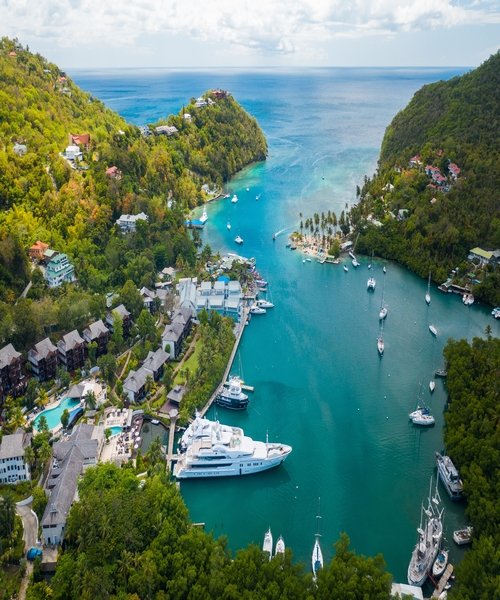
Saint Lucia includes a real estate pathway within its citizenship framework, but the property side is tightly defined. The official programme selects qualifying real estate projects and describes them primarily in terms of high-end branded hotels, resorts, and boutique developments, so this is best presented as an approved-project route rather than a general residential property route.

EUROPE
Türkiye
Türkiye is the most important non-Caribbean route for this page. Its framework differs from the island programmes because it is centred on a qualifying real estate purchase under official rules, rather than investment into a government-approved hospitality or resort project. That makes it especially relevant for users looking for a more direct property-led citizenship route.
Caribbean vs Non-Caribbean Property Routes
The Caribbean dominates this niche. Antigua and Barbuda, Dominica, Grenada, St. Kitts and Nevis, and Saint Lucia all provide citizenship frameworks that include qualifying real estate or approved project investment. For most users, these programmes form the core shortlist for this topic.
Outside the Caribbean, the market becomes much narrower. Türkiye stands out because the official route is built around qualifying property acquisition rather than a resort-style approved project model, which gives this page a useful non-Caribbean comparison point without diluting the search intent.
Explore Related Citizenship Routes
Looking for a broader or narrower comparison? Explore these related pages:
Frequently Asked Questions
Citizenship by real estate investment refers to citizenship programmes that include a qualifying property route under national law. In some countries this means investment in an approved development, while in others it may mean a qualifying direct property purchase under prescribed rules.
No. In many programmes, especially in the Caribbean, only approved projects or approved developments qualify. Buying ordinary residential property on the open market does not automatically create a path to citizenship.
The main active examples for this page are Antigua and Barbuda, Dominica, Grenada, St. Kitts and Nevis, Saint Lucia, and Türkiye. These routes differ in how property qualifies and how the investment must be structured.
That depends on the programme. Some jurisdictions explicitly require a minimum holding period before resale, while others attach the route to approved project rules or retention conditions. This is one of the first details worth checking when comparing property-led citizenship options.